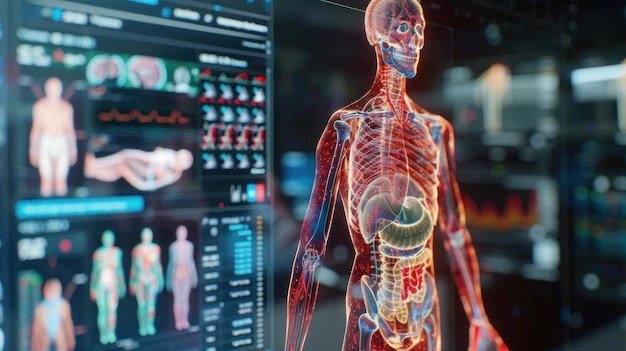
In the dynamic world of medical illustration and anatomical education, the leap from static diagrams to dynamic, intelligent visualizations is profound. Nowhere is this more evident than in the sophisticated realm of AI for Uvula Anatomy & Visualization, where cutting-edge artificial intelligence is transforming how we understand, teach, and communicate intricate anatomical details. No longer are we constrained by laborious manual drawing or painstaking video annotation; AI is ushering in an era of unprecedented clarity, efficiency, and customization, making complex structures like the uvula more accessible than ever before.
This isn't just about faster image creation; it's about a fundamental shift in how anatomical insights are generated and consumed. Imagine having the power to produce highly detailed, perfectly labeled anatomical models and videos in minutes, tailored precisely to a specific age group, gender, or even a unique pathological condition. That's the promise AI is delivering right now.
At a Glance: Why AI is a Game-Changer for Uvula Anatomy & Visualization
- Unrivaled Speed: Transform days or weeks of manual illustration and video production into mere minutes.
- Precision & Accuracy: Achieve over 95% accuracy in segmenting and labeling anatomical structures, including the intricate details of the uvula and surrounding pharyngeal anatomy.
- Dynamic Customization: Generate visualizations tailored by age, gender, health condition, and even stylistic preferences (e.g., photorealistic vs. schematic).
- Enhanced Consistency: Maintain perfect label and visual coherence across entire video sequences, crucial for demonstrating dynamic processes like swallowing or surgical procedures.
- Multi-Modal Integration: Convert various inputs—from MRI/CT scans to surgical footage—into interactive, labeled 3D models or enhanced videos.
- Empowered Communication: Create personalized, easy-to-understand explanations for patients and highly effective training modules for medical professionals.
The Long-Standing Bottleneck in Anatomical Insight
For decades, the pursuit of clearer anatomical understanding faced significant hurdles. Illustrating human anatomy, especially delicate structures like the uvula and its complex musculature, was an art form demanding exceptional skill, time, and specialized knowledge. Creating medical videos for education or patient communication involved a laborious pipeline: expert illustrators, animators, and medical reviewers meticulously drawing, modeling, and labeling every element.
Consider the uvula: a small, yet functionally important structure, central to speech, swallowing, and even preventing food from entering the nasal cavity. Visualizing its precise anatomy, blood supply, nerve innervation, and dynamic movements during various physiological processes is critical. Yet, traditionally, capturing this nuance in a way that is both accurate and engaging has been a monumental task. The cost and time associated with generating high-fidelity, labeled content meant that truly customized educational materials were often out of reach for many. This created a bottleneck, limiting access to the best visual aids for training, patient education, and even surgical planning.
AI's Revolutionary Entry: A New Era for Anatomical Visualization
Enter artificial intelligence. AI-powered tools are not just augmenting human capabilities; they are fundamentally redefining the landscape of human anatomy illustration and medical video production. By harnessing advancements in generative AI and computer vision, these platforms create detailed, labeled images and high-fidelity anatomical models from even raw 2D scans. What once took a team of experts days or weeks now happens in minutes, with a level of precision and consistency previously unimaginable.
Think of an "AI for uvula anatomy generator" as a super-powered digital artist, capable of rendering the uvula and its surrounding pharyngeal structures with scientific exactitude, customized to your precise specifications. This dramatically reduces production time, making sophisticated visuals accessible to a broader audience of educators, clinicians, and patients. You can learn more about how these specialized tools work by visiting our Uvula AI Generator hub.
How AI Automates Anatomy Labeling with Astounding Accuracy
The core of AI’s impact lies in its ability to automatically identify, segment, and label anatomical structures within images and videos. This automation isn't just fast; it’s incredibly precise, driven by sophisticated deep learning algorithms.
1. Real-Time Segmentation and Annotation: The Brains Behind the Labels
Modern AI models are trained on vast datasets of medical imagery, such as NIH’s Visible Human Project, to recognize patterns and features unique to different body parts. These deep learning algorithms perform real-time segmentation and annotation, meaning they can identify and outline specific structures—like the uvula, tonsils, soft palate, or vocal cords—without any manual input. This process achieves greater than 95% accuracy for segmenting organs, bones, and vasculature.
Imagine uploading a video of a laryngoscopy. An AI system can instantly detect and label the uvula, tracking its movements as the patient breathes or attempts to swallow. Platforms like Reelmind.ai come equipped with pre-trained models that automatically overlay labels, arrows, or heatmaps onto videos, highlighting areas of interest. This isn't just a static label; it’s a dynamic, context-aware annotation that adapts to the visual flow. For a structure as small and mobile as the uvula, this level of real-time, high-accuracy labeling is invaluable for both diagnostic training and patient explanation.
2. Multi-Modal Input Support: From Scans to Dynamic 3D
AI systems aren't picky about their input. They seamlessly process data from a wide array of sources, transforming complex medical data into easily digestible visual content:
- MRI/CT Scans to Interactive 3D: Picture a patient's CT scan data of their head and neck. AI can take those cross-sectional images and convert them into interactive 3D videos, allowing users to rotate, zoom, and explore the uvula and surrounding tissues from any angle, complete with accurate labels. This is a game-changer for surgical planning and detailed anatomical study.
- Microscopy Footage Enhanced with Dynamic Labels: For histological studies or cellular-level visualization of uvula tissue, AI can enhance microscopy footage, adding dynamic labels that track specific cell types or structures in motion.
- Surgical Recordings Annotated in Real-Time: During a surgical procedure involving the pharynx, AI can annotate surgical recordings in real time. This means labels for the uvula, tonsillar pillars, or specific muscles appear automatically, tracking the surgeon's tools and the anatomical changes throughout the operation. This offers unprecedented opportunities for post-operative review, training future surgeons, and even live surgical assistance.
Enhancing Consistency with AI-Generated Keyframes
One of the most persistent challenges in creating anatomical animations or procedural videos has been maintaining visual and labeling consistency across an entire sequence. Manual adjustments often lead to subtle discrepancies. AI, however, solves this by design.
Frame-to-Frame Coherence: Seamless Visual Narratives
Temporal-aware AI is designed to ensure labels and visuals remain perfectly consistent across video sequences. This means:
- Persistent Labels: If you're demonstrating the uvula's movement during phonation, the label for the uvula will not flicker or disappear between frames; it will accurately track the structure's position throughout the simulation.
- Tracking Dynamics: In a video simulating a beating heart, valve labels remain precisely positioned relative to the valves. Similarly, for a surgical training video, AI can track the trajectory of surgical tools, ensuring their labels and any associated annotations (e.g., "incision point," "suture placement") stay accurate and aligned with the tool's movement. This level of consistency is paramount for conveying complex anatomical or procedural information without visual distractions or misinterpretations.
Style and Theme Adaptability: Tailoring Visuals to Your Audience
Beyond consistency in labeling, AI also offers remarkable flexibility in visual presentation. You no longer need to re-process raw data to change the aesthetic of your anatomical models or videos.
- Visual Style Switching: Users can instantly switch between different visual styles—from photorealistic renderings that mimic real-world tissues to highly schematic, simplified views ideal for conveying basic concepts. This is incredibly useful for adapting content for diverse audiences, from seasoned medical professionals to lay patients.
- Brand and Audience Alignment: Features like Reelmind’s Style Transfer allow users to adjust lighting, textures, color palettes, and label aesthetics to match specific branding guidelines or audience preferences. Imagine generating a uvula anatomy video for a pediatric audience with softer colors and simplified labels, then instantly re-rendering it for a medical conference with precise, high-definition anatomical accuracy and detailed annotations, all from the same core data. This level of adaptability makes content creation far more efficient and impactful.
Practical Applications in Healthcare: From Classroom to Clinic
The implications of AI for uvula anatomy and visualization extend across the entire healthcare ecosystem, revolutionizing education, training, and patient engagement.
Medical Education: Redefining Learning Experiences
The traditional anatomy lab is being augmented by dynamic, AI-powered learning tools:
- Virtual Dissections with AI-Generated Videos: Students can now engage in virtual dissections, exploring complex structures like the uvula in high-fidelity, interactive videos. These aren't just static images; they are dynamic models that can be manipulated, layered, and labeled on demand, offering an unparalleled learning experience that complements traditional methods.
- Procedural Training with Simulated Scenarios: AI can simulate rare surgical scenarios—like a challenging uvulopalatopharyngoplasty (UPPP) procedure—providing a safe, repeatable environment for trainees. Step-by-step annotations guide learners through each phase, highlighting critical landmarks, potential pitfalls, and best practices specific to the uvula and surrounding pharyngeal anatomy. This allows for focused practice and mastery before ever entering an operating room.
Patient Communication: Clarity and Empowerment
One of AI's most powerful applications is its ability to demystify complex medical information for patients, fostering better understanding and shared decision-making:
- Personalized Explanations: Imagine a patient who has undergone an MRI for sleep apnea, which might involve the uvula. An AI system can convert that patient’s specific MRI data into a labeled video, highlighting their uvula and related structures, explaining their condition, and even doing so in their native language. This personalized approach makes abstract medical concepts tangible and understandable.
- Pre-Surgical Consent with Interactive Videos: Before a procedure involving the uvula (e.g., a tonsillectomy with uvulectomy), interactive videos generated by AI can walk patients through the surgical steps, illustrate the expected anatomical changes, and even present AI-predicted outcomes. This level of visual detail significantly enhances informed consent, helping patients feel more confident and prepared for their treatment.
Spotlight on Innovation: Reelmind.ai's Role in Anatomical Visualization
Platforms like Reelmind.ai exemplify the practical power of AI in democratizing high-quality medical video production. They offer a suite of features that directly address the previous bottlenecks in anatomy visualization.
Custom Model Training: Tailored to Your Specific Needs
While general AI models are powerful, some anatomical specializations require even greater specificity. Reelmind.ai allows users to upload their own proprietary medical data—think specialized images or videos of uvula pathologies, unique patient cases, or specific surgical approaches—to train domain-specific labeling AI. This means an ENT clinic could train a model specifically for various conditions affecting the uvula and soft palate, ensuring labels and segmentations are perfectly tuned to their particular focus. This capability extends to highly specialized fields like orthopedic or neuroanatomy, and equally to sub-regions of general anatomy like the oropharynx.
Community Collaboration: Shared Knowledge, Enhanced Tools
The platform also fosters a collaborative environment. Users can share their specialized models or meticulously crafted anatomical videos on the platform. This not only allows them to earn credits but also encourages crowdsourced improvements. Imagine a global community of ENT specialists contributing and refining AI models for uvula visualization, continually enhancing the accuracy and utility of these tools for everyone.
Rapid Prototyping: Accelerating Content Creation
Storyboarding complex medical procedures or anatomical explanations traditionally required significant upfront investment in time and resources. Reelmind.ai dramatically accelerates this process, enabling users to generate over 30 keyframes in seconds for storyboarding intricate surgical steps or physiological processes involving the uvula. This rapid prototyping capability allows medical content creators to quickly visualize, iterate, and refine their narratives without getting bogged down in manual drawing.
Efficiency: From Raw Data to Patient-Ready Video in Minutes
The tangible efficiency gains are perhaps the most compelling. Consider this real-world scenario: a cardiology team can upload angiogram videos, apply Reelmind’s pre-trained vascular labeling model, and export a patient-ready video complete with multilingual captions in under 10 minutes.
Applying this same principle to uvula anatomy, an ENT specialist could upload a video of an endoscopic examination of the pharynx, use an AI model trained for upper airway structures to automatically label the uvula, tonsils, and posterior pharyngeal wall, and then generate a clear, concise explanation video for a patient—all in a fraction of the time it would have taken previously. This shift means medical professionals can spend more time focusing on patient care and less on the arduous task of content creation.
Navigating the Future: AI's Evolving Role in Anatomical Science
The rapid pace of advancement in AI suggests that the capabilities we see today are just the beginning. The future of AI for uvula anatomy and visualization promises even greater integration, precision, and personalized applications.
Addressing Data Requirements and Ethical Considerations
While AI offers immense benefits, it's important to acknowledge the foundations upon which it's built: vast, high-quality datasets. The continued improvement of these models relies on access to diverse and representative medical imaging data. Furthermore, ethical considerations surrounding data privacy, algorithmic bias, and the responsible use of AI in medical diagnosis and patient communication will remain paramount. Ensuring that these powerful tools are developed and deployed with transparency and patient welfare at their core is a continuous effort.
Beyond Static: Predictive and Diagnostic Integration
Imagine AI not just visualizing anatomy, but also predicting how a uvula might respond to certain interventions or identifying subtle anatomical anomalies indicative of early-stage disease. Future AI systems could integrate with diagnostic tools to provide real-time anatomical analysis during examinations, offering predictive insights based on visual data. This moves beyond mere visualization into truly intelligent assistance for clinicians.
Democratizing Expertise
Ultimately, AI-driven tools are democratizing high-quality medical video production. They are making anatomy visualization faster, more accurate, and critically, more accessible. This eliminates traditional bottlenecks in medical education, training, and patient care, ensuring that powerful visual aids are no longer a luxury but a standard resource available to all who need them. The ability to quickly and accurately visualize complex structures like the uvula empowers both practitioners and patients, fostering a more informed and effective healthcare environment.
Your Next Steps: Harnessing the Power of AI for Anatomical Clarity
The revolution in anatomical visualization is here, and tools like AI-powered generators for specific structures such as the uvula are leading the charge. If you’re involved in medical education, patient communication, surgical training, or any field that benefits from clear, precise anatomical insights, exploring these AI solutions is no longer an option—it’s a necessity.
Take the time to investigate how these platforms can integrate into your workflow, saving you countless hours while dramatically enhancing the quality and impact of your visual content. Engage with developers, explore demos, and consider how custom model training could unlock even greater value for your specific anatomical focus. The era of comprehensive, dynamic, and instantly customizable anatomical visualization is upon us, driving clearer insights and ultimately, better outcomes for everyone.